Many of us have an old phone or laptop tucked away in a drawer. Even though we know we won’t use it again, we let it sit there because we’re not sure what to do with it. For organizations, this same uncertainty can exist on a much larger scale. As technology evolves and equipment is upgraded, laptops, phones, monitors and other digital devices reach the end of their useful life. What happens to those retired devices – and the consequences of those choices – has become increasingly important.
This challenge prompted BCLC to take an approach that viewed IT management not as an afterthought, but as a responsibility and an opportunity. Since 2019, BCLC has worked with Green4Good, a program run by Compugen that helps organizations manage retired IT equipment safely and responsibly. Instead of defaulting to disposal, the program prioritizes the reuse and responsible recycling of retired technology and ensures the protection of sensitive data every step of the way.
“Technology has an essential role at BCLC, but it comes with an environmental footprint. By keeping IT equipment out of landfills with Green4Good, we’re taking practical steps to reduce our impact,” said Jim Gudjonson, BCLC’s manager of sustainability innovation. “It supports our broader commitment to take climate action and build resilient communities for B.C.’s future generations.”
It also aligns with BCLC’s circular economy objectives. Digital devices require significant energy and resources to manufacture, including materials like rare earth metals, glass and plastics. When this equipment is sent to the landfill too soon, those embedded resources are lost – while the manufacturing of new devices requires more energy and more resources. Rather than following a traditional “take-make-waste” model like this, Green4Good helps repurpose that equipment, keeping valuable materials in circulation for as long as possible and helping to limit the associated generation of greenhouse gas (GHG) emissions.
Gudjonson added that the program allows BCLC to accumulate certified carbon credits, which can be used to offset the GHG emissions associated with corporate travel and events.
“There’s a quote that resonates with me: ‘We don’t bring anything into this world, and we don’t take anything with us when we leave,’” said Curt Foidart, BCLC’s evergreen program manager. “Green4Good helps us to be good stewards – using what we need, avoiding excess and having a clear plan for how assets are retired when they reach the end of their useful life.”
For BCLC, responsible IT management isn’t just about sustainability – it’s about security. When devices are retired, they can still hold sensitive information. Green4Good makes sure that data is either securely wiped or physically destroyed following industry standards. Each device is tracked from pickup to final processing, and records are kept for auditing and compliance.
“Unlike traditional electronics recycling, Green4Good integrates security controls directly into the process,” said Foidart. “These controls make the program suitable for organizations with high security and regulatory requirements, like BCLC.”
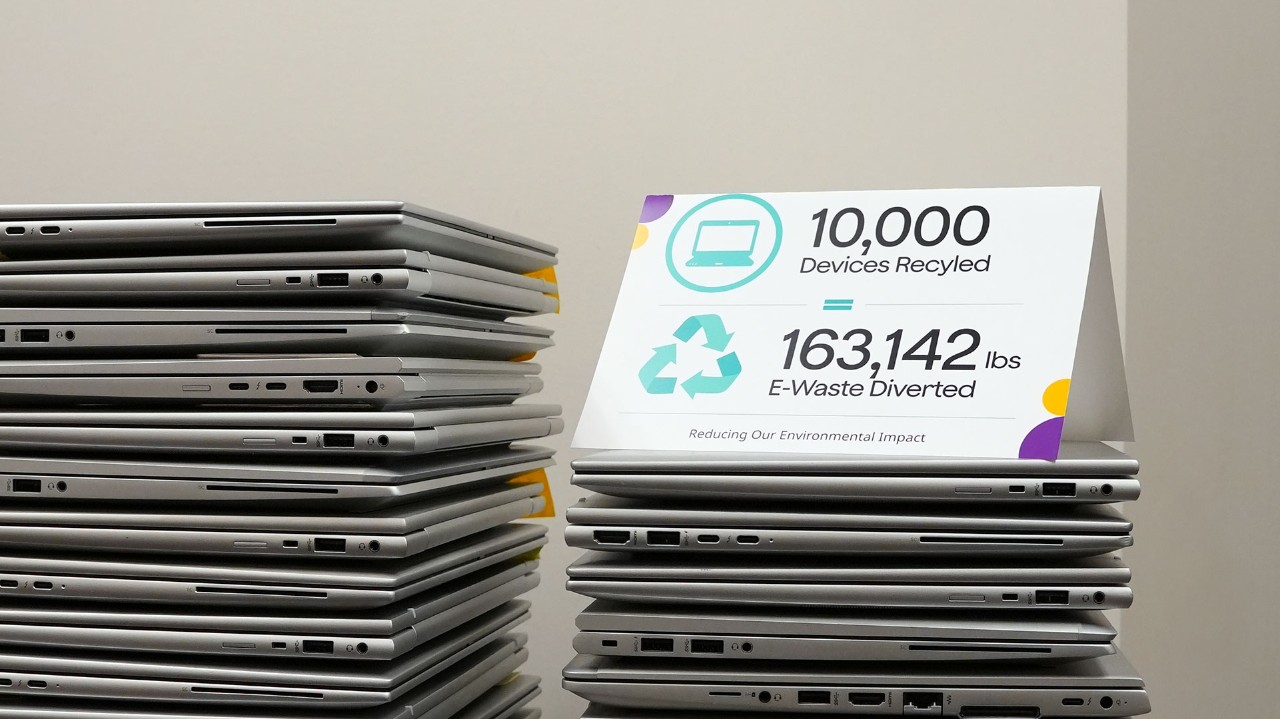
In six years, BCLC has securely processed more than 10,000 IT devices and kept over 74 metric tonnes of equipment out of landfill through Green4Good. The program has also helped reduce the need for long-term storage, lower administrative overhead and minimize security and compliance risks.
For Gudjonson and Foidart, the significance of this program goes beyond metrics and speaks to mindset.
“With teams across BCLC working together on this program, it demonstrates that proactive and integrated processes, commutatively, have a significant year-over-year impact compared to one-off reactive recycling strategies,” said Gudjonson.
Foidart agrees. “It helps us be intentional about what we acquire and responsible about what we let go. It allows BCLC to modernize its technology environment without simply shifting the problem elsewhere.”
By planning for the moment a device is powered down for the last time, BCLC aims to keep today’s technology upgrades from becoming tomorrow’s problems – and demonstrates its commitment to the greater, greener good.